“First Blood 2” (2025) brings Sylvester Stallone back to one of his most iconic characters, presenting an older, more reflective John Rambo who has spent years living in isolation after the devastating events of his past. Having withdrawn to a quiet life in the mountains, he is haunted not by enemies, but by memories—faces he could not save and wars that never truly ended for him. The film opens with Rambo attempting to find peace, tending to the land and avoiding the violence that once defined him.

His solitude is interrupted when an old contact from military intelligence arrives with news that a group of American aid workers has gone missing near a conflict zone overseas. Among them is someone Rambo once mentored, a young combat medic who admired him and sought to learn from his experiences. Although initially resistant, Rambo understands that he cannot ignore a call involving someone he quietly viewed as a surrogate child. This mission, unlike the others, is personal in a way he cannot deny.
Rambo reluctantly returns to a world of guns, mercenaries, and political instability, traveling to a remote region controlled by a ruthless paramilitary group. There he discovers that the kidnappings are part of a larger scheme involving illegal weapons trafficking and the exploitation of local communities. His presence is immediately noticed, and the enemies he faces are younger, faster, and backed by powerful resources. Yet they underestimate the instincts that have kept Rambo alive for decades.
As he navigates dense jungles and abandoned outposts, Rambo’s internal conflict becomes a major thread of the story. He wrestles with guilt over the life he has lived and fear that his own violence may only bring more suffering. At the same time, his deep compassion for innocent people drives him forward. The film uses these moments to highlight a weary warrior struggling to balance his capacity for destruction with his longing for redemption.
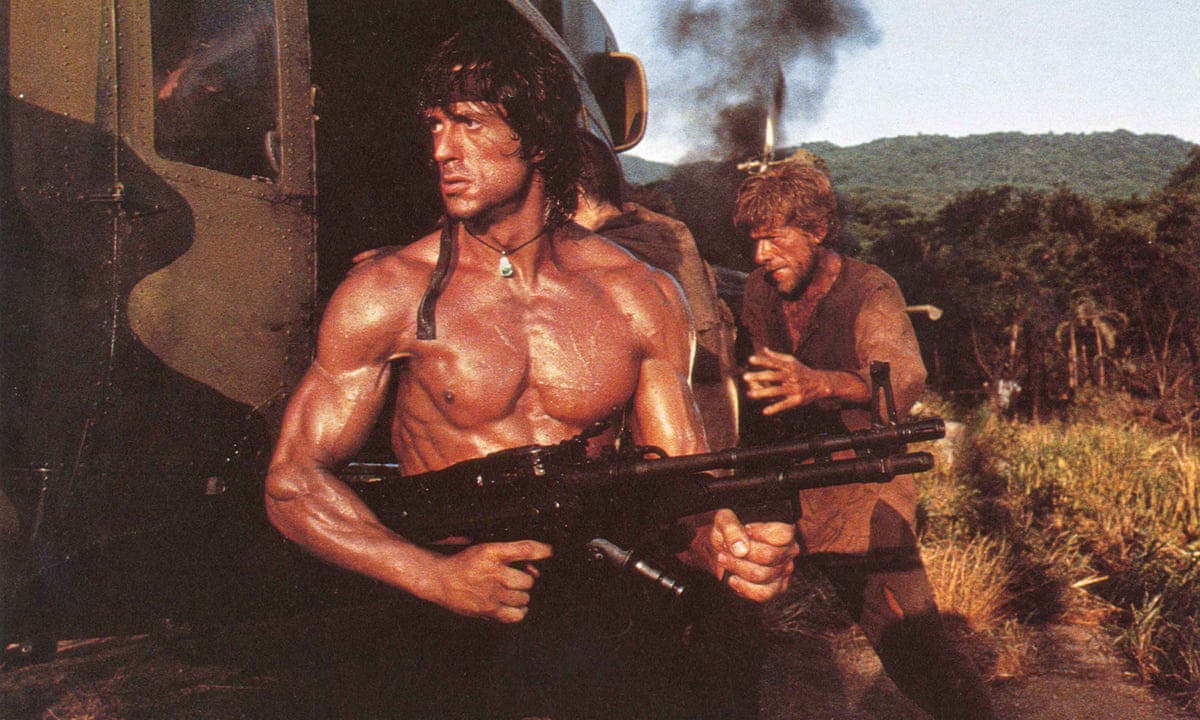
When Rambo finally locates the captured aid workers, the rescue becomes a desperate, high-stakes battle that pushes him to his physical and emotional limits. Stallone portrays Rambo not as an indestructible action figure, but as a man fighting time, pain, and his own ghosts. The action sequences are brutal yet grounded, emphasizing the raw survival skills that defined the character from the beginning.
In the end, “First Blood 2” (2025) becomes not only a rescue mission but a story of legacy and closure. Rambo confronts his past not through vengeance, but through the act of saving lives—proving that even a lifetime of war cannot extinguish his humanity.