Ice Cold in Alex is set during the harsh desert campaigns of World War II in North Africa, where survival often depends on courage, wit, and sheer luck. The story begins with Captain Anson, a British officer, who has been wounded and must be evacuated from the front lines. He is joined by Sergeant Miller, a dedicated and resourceful soldier, as they embark on a grueling journey across the desert to reach the safety of the Egyptian coast. The desert itself becomes a formidable adversary, with scorching heat by day, freezing nights, and endless stretches of sand that test both their physical endurance and mental resolve.

Along the way, Anson and Miller encounter a small group of allied soldiers and civilians, including a feisty nurse named Lisa, who insists on accompanying them despite the dangers. Their party must navigate not only the hostile desert terrain but also German patrols determined to capture or kill anyone attempting to escape. The tension builds as water supplies dwindle, vehicles break down, and the unforgiving sun beats down on them mercilessly, making every step forward a struggle against both nature and the enemy.
The journey is as much about human endurance as it is about tactical skill. Captain Anson, still recovering from his injuries, struggles with weakness and despair, while Sergeant Miller demonstrates unwavering resourcefulness, finding ways to repair vehicles, ration food, and navigate the shifting sands. Their bond grows stronger with every obstacle, and the small moments of humor and camaraderie help them retain their sanity in an environment that seems determined to crush them.
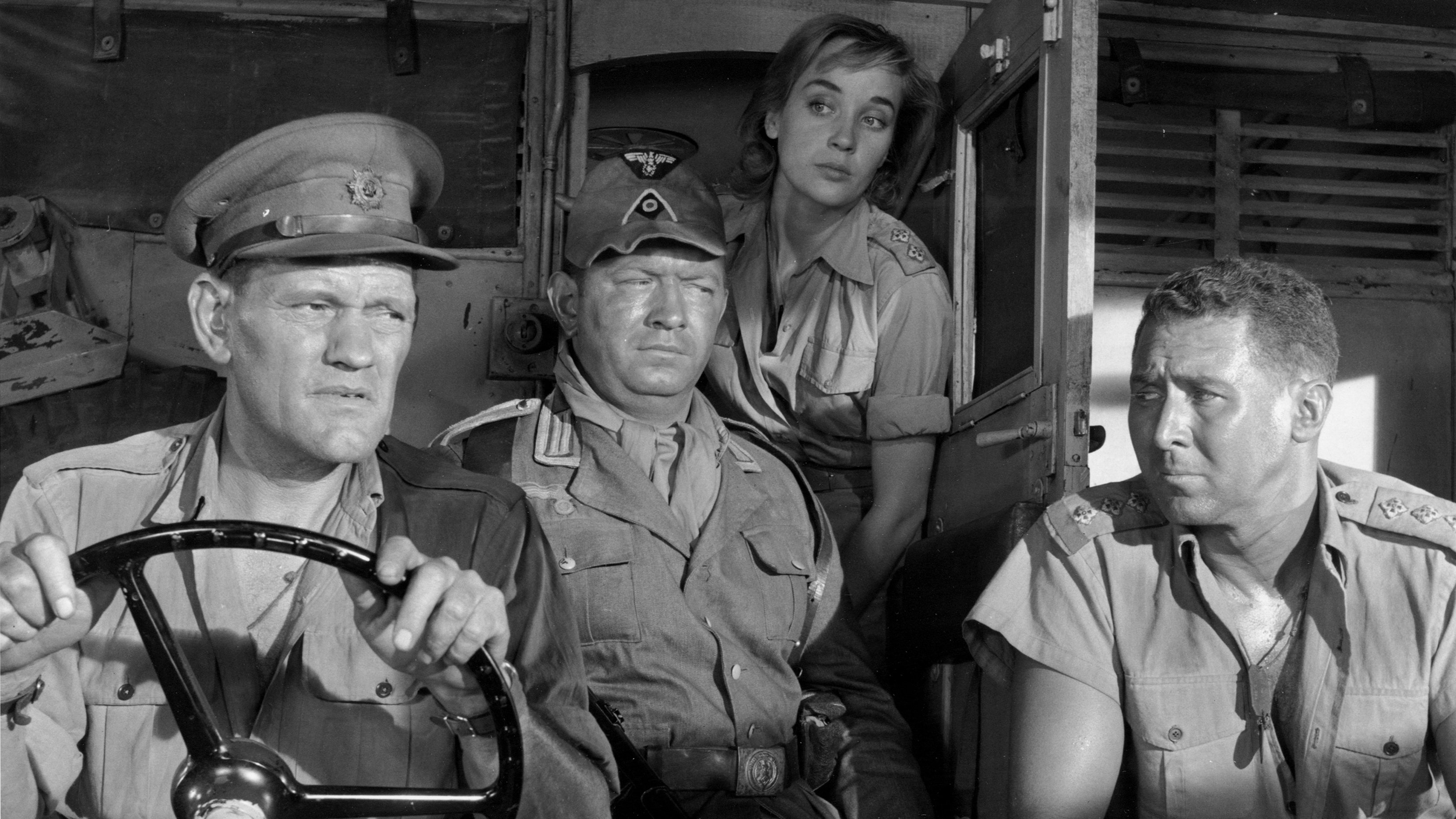
As they approach the Egyptian city of Alexandria, the tension escalates. German forces close in, forcing the group to make dangerous decisions, split up, and take desperate risks to survive. The film emphasizes the psychological strain of the desert march, showing how fear, fatigue, and hope clash in the minds of soldiers far from home. Every encounter with the enemy becomes a test of nerves, strategy, and instinct, highlighting the thin line between life and death in wartime.
In one of the film’s most iconic sequences, Anson finally reaches Alexandria and experiences a brief, fleeting moment of relief. His first ice-cold beer in the city symbolizes not just refreshment but victory over exhaustion, fear, and adversity. It represents the small joys that sustain people even in the darkest times, capturing the human need for respite amid chaos.
Ice Cold in Alex ends on a note of cautious optimism, celebrating human resilience and perseverance. The journey across the desert shows that survival is not merely about strength or skill, but about courage, loyalty, and the determination to keep moving forward even when all seems lost. The desert remains harsh and unforgiving, yet hope and endurance shine through, leaving a lasting impression of both struggle and triumph.