“Jurassic Shark 4: Dominion of the Deep” returns audiences to a world where prehistoric terror refuses to stay buried, and the film wastes no time plunging viewers into its chaotic, water-logged nightmare. The story begins with a deep-sea drilling operation off the coast of Nova Scotia, where a research team accidentally awakens an ancient apex predator sealed beneath the ocean floor for millions of years. As strange tremors ripple across the waters and communication lines fail, the crew realizes too late that something colossal is rising from the abyss.

The plot shifts to marine biologist Dr. Elena Marsh, who has spent years studying anomalous movements in the Atlantic. When she receives fragmented distress calls from the drilling platform, she joins a rescue mission led by ex-naval officer Grant Harlow. Their uneasy alliance forms the emotional core of the film, as Elena’s scientific caution clashes with Grant’s hardened instinct for survival. Their journey across increasingly volatile waters sets the stage for the film’s escalating sense of dread.
Once the team reaches the abandoned platform, they discover grisly evidence of the creature’s attack. What makes this installment stand out is its willingness to expand the mythology beyond a single giant shark. Elena uncovers data showing that the drilling site had pierced a cavern system sheltering multiple prehistoric species, all of them adapted to the crushing darkness of the deep. The realization that the shark is only the beginning sends a chilling ripple through the story’s momentum.
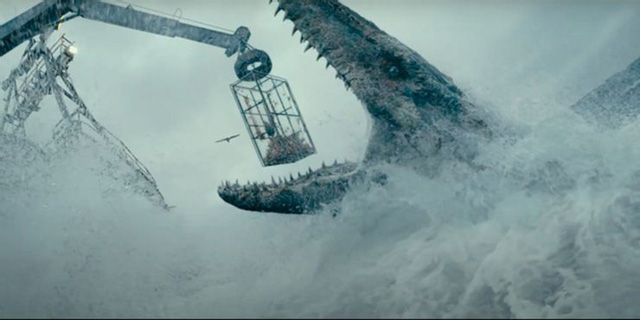
As the monstrous Megalodon-like predator begins terrorizing nearby fishing towns, the film balances spectacle with tension. Scenes of the shark breaching beneath storm-filled skies create a sense of relentless unpredictability. Yet the quieter moments—particularly Elena reviewing recovered footage or Grant confronting his past failures—provide emotional grounding that helps the action hit harder.

The climax unfolds during a desperate attempt to lure the shark back to the trench using seismic charges. The operation quickly unravels when additional deep-sea creatures emerge, forcing Elena and Grant to improvise a desperate escape. Their struggle beneath the collapsing platform, surrounded by churning water and flashing bioluminescent predators, stands as one of the film’s most visually memorable sequences.
In the end, “Jurassic Shark 4: Dominion of the Deep” embraces the pulpy thrills its title promises while delivering surprisingly thoughtful world-building. The film closes on an ominous note, suggesting that the breach in the ocean floor remains open—and that more ancient monsters may soon rise to reclaim the world above.